Why Building Blocks Matter

Naveen Kumar
| 25-12-2025
 · Lifestyle Team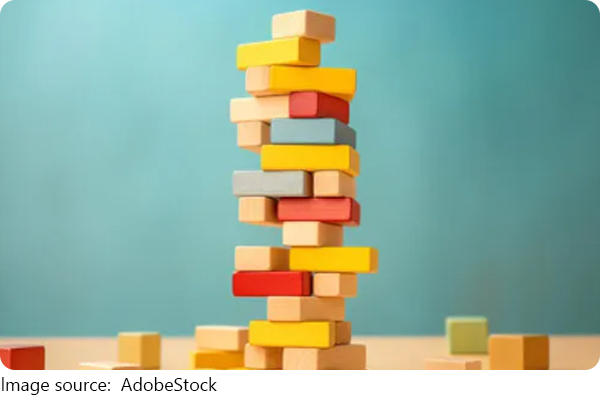
Building block toys are often seen as simple, colorful plastic pieces scattered around the floor, but they offer far more than just entertainment.
For children, they are powerful tools for learning and development.
Whether it's a first set of blocks or the fiftieth one, the benefits of these toys continue to grow as kids learn how to stack, organize, and build with them. But what makes building blocks so helpful? Let's explore.
Building Blocks Foster Creativity
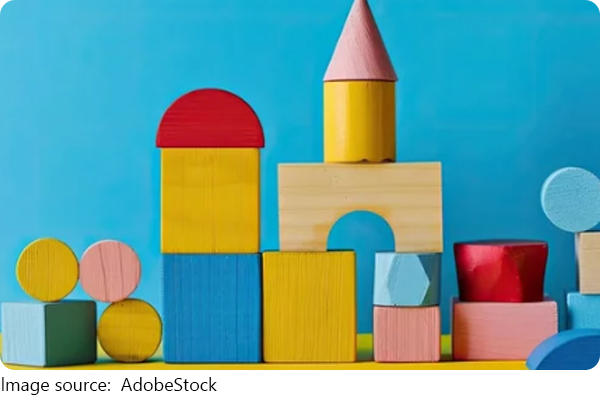
When children play with building blocks, they're not just stacking pieces—they're constructing entire worlds. Blocks are a blank canvas for imagination. From simple towers to elaborate castles, the possibilities are endless. This type of open-ended play helps children think creatively, as there are no limits to what they can build.
Stimulates imaginative thinking: Children are encouraged to come up with their own designs and scenarios, which can help them develop problem-solving skills.
Enhances storytelling: As children build, they often make up stories around what they've created, whether it's a castle for princesses or a skyscraper for superheroes.
The more blocks kids have, the more complex their structures can become, which directly fuels their ability to imagine and create. For example, a child might build a bridge and then pretend that it's a part of a great adventure, engaging not just in physical play but also in a narrative that enhances their cognitive abilities.
Fine Motor Skills and Hand-Eye Coordination
When kids play with blocks, they're doing more than just arranging them. They're also strengthening their fine motor skills. The act of picking up and placing blocks teaches children how to manipulate objects with precision, which is a key part of hand-eye coordination.
Grasping and stacking: Picking up small pieces and balancing them on top of each other requires dexterity.
Adjusting to fit pieces together: Matching blocks together helps children practice spatial awareness and the ability to plan ahead.
One simple example is when children figure out how to balance one block on top of another. At first, it may fall over, but as they practice, they improve their ability to assess weight, balance, and spatial positioning—skills they will use throughout their lives.
Problem-Solving Skills and Critical Thinking
Building with blocks isn't just about creating something that looks nice; it's about facing challenges and finding solutions. When a child's block tower collapses, they must think critically about how to rebuild it, often trying different approaches until they find a solution that works. This encourages resilience and problem-solving skills.
Trial and error: A child learns to persevere through failure by figuring out how to fix or adjust their creations.
Planning and executing: As kids grow, they start planning their builds, considering factors like structure and support before starting.
For instance, when building a bridge, a child might realize that a wider base is needed for stability. This insight helps them develop both practical and cognitive skills, teaching them how to adjust their strategies and make decisions based on trial and error.
Social Skills and Collaboration
Building blocks also offer a great opportunity for children to interact with their peers. Whether they are building together or taking turns to add their own elements, block play encourages social interaction, negotiation, and teamwork. These are essential social skills that kids carry into other areas of their lives.
Teamwork: Building something together, whether it's a castle or a car, teaches children how to work with others toward a common goal.
Sharing and communication: Children must talk about what they want to build and share the pieces, teaching them valuable communication skills.
For example, during group play, a child might suggest building a zoo, and others may have ideas about which animals should go inside. This collaboration allows children to learn how to compromise, listen to others, and contribute their ideas to the group effort.
Cognitive Development and STEM Learning
Beyond creativity and play, building block toys also contribute to cognitive development. Playing with blocks introduces children to early concepts of engineering, architecture, and physics. The interaction between shapes, sizes, and structures gives kids a first-hand understanding of how things work, which is a foundational skill for STEM (science, technology, engineering, and math) learning.
Understanding symmetry and balance: As children experiment with different block shapes and sizes, they start to understand concepts like balance and symmetry.
Exploring geometry and measurements: When building with blocks, children unknowingly explore basic geometry principles, like shapes, angles, and spatial relationships.
Imagine a child trying to build a bridge with blocks. They might experiment with different configurations, trying to balance the pieces or make the bridge longer. As they do this, they are engaging with early engineering concepts that help develop their logical and spatial reasoning skills.
Emotional Benefits of Building Blocks
Finally, building blocks provide emotional benefits as well. The sense of accomplishment that comes from completing a project can boost a child's self-esteem and confidence. Furthermore, the act of building offers an opportunity for children to focus their energy and calm their minds.
Sense of achievement: Completing a build, no matter how small, can give a child a sense of pride and accomplishment.
Stress relief: Building offers a break from the fast pace of daily life, giving children a chance to slow down and focus on something tangible.
Think about a child who spends time building a tower, only for it to fall down—and then builds it again. The process of rebuilding teaches resilience and patience, while the final result brings a sense of pride. This cycle can help children feel more emotionally balanced, teaching them that even setbacks can lead to success if they persist.
Conclusion
Building block toys are so much more than just simple playthings. They are tools that foster creativity, build fine motor skills, enhance problem-solving abilities, and encourage social interaction. Whether kids are working alone or with others, these toys help them grow in many different ways. So, the next time you see a child engrossed in building a tower or a fort, remember that they're not just having fun—they're learning and developing skills that will help them for years to come.